Vestavia Hills approves Walmart incentive package aimed at bringing grocery store back to Cahaba Heights
BIRMINGHAM, Ala. (WBRC) - For more than a year, a vacant grocery store has sat along Crosshaven Drive in Cahaba Heights - a reminder of the Winn-Dixie closure that left residents without a neighborhood supermarket.
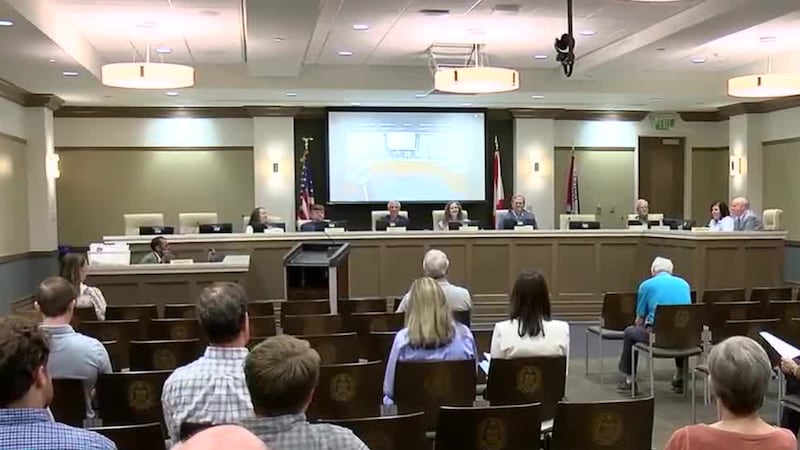
On Monday night, Vestavia Hills leaders took a major step toward changing that.
The Vestavia Hills City Council voted to approve an economic development agreement with Walmart designed to support construction of a new Walmart Neighborhood Market at the former Winn-Dixie site at 3925 Crosshaven Drive.
The retailer plans to demolish the existing building and redevelop the property into an approximately 45,000-square-foot grocery store featuring grocery, pharmacy and general merchandise services. Walmart has indicated it expects to invest at least $20 million into the project.
Under the agreement, Vestavia Hills will rebate 46.875% of local sales tax revenue generated by the store over a 10-year period, with incentives capped at $3 million.
City officials said the incentive package is intended to bridge what they call a “feasibility gap” created by redevelopment costs associated with the aging property.
Before the vote, City Manager Jeff Downes framed the discussion around what city leaders consider one of Vestavia Hills’ most important economic priorities: keeping residents’ spending inside city limits.
“First of all, we all know that our number one source of revenue to support and sustain this organization, this city, comes from sales taxes,” Downes said. “And if you look at sales taxes, the number one taxpayers, the number one category within sales taxes are grocery store sales taxes.”
Downes said the city’s economic development strategy focuses heavily on preventing “leakage” — a term used to describe residents spending money in neighboring communities instead of Vestavia Hills.
“With the unfortunate demise of Winn-Dixie who left Cahaba Heights, they left Cahaba Heights without a grocery store,” Downes said. “The grocery stores that are in the area are in other jurisdictions. And so the leakage has become very great with the absence of that Winn-Dixie store.”
The city has spent roughly the past two years working with property owners as they sought a new tenant for the site.
According to Downes, Walmart is currently under contract to purchase the property and redevelop it as a Neighborhood Market.
Like many large-scale development projects, he said, the proposal eventually led to discussions about incentives.
“As with any big economic development project and opportunity, oftentimes there’s a conversation on incentive,” Downes said. “We start the conversation off that the city is not a bank, the city does not write a blank check, and we are not huge risk takers.”
Downes explained the property contains aging infrastructure and obsolete structures that would require significant investment before construction could begin.
“They could go somewhere else,” he said. “Or they could consider, in a positive economic fashion, this site in Cahaba Heights. Through analysis, the determination is that there’s a $3 million feasibility gap.”
Rather than contributing taxpayer dollars upfront, city officials structured the agreement as a performance-based incentive.
“We don’t want to take a risk of contributing money on the front end,” Downes said. “We want to have a success fee, if you will.”
Under the arrangement, Walmart would only receive rebates after generating new sales tax revenue for the city.
Downes said city projections estimate the development would generate more than $11.1 million in new revenue over the next decade.
“If you look at that less the $3 million incentive, the 10-year return on investment is $8.1 million,” he said.
Beyond the financial return, Downes argued the project would restore a needed service to Cahaba Heights residents.
“It provides a quality-of-life amenity for those that live in the Cahaba Heights area of our community, and that’s super important,” Downes said. “Not only does it pay for itself, it really solidifies what is needed within that Cahaba Heights community.”
Following the meeting, Mayor Ashley Curry said replacing the former Winn-Dixie has been a priority since the store closed.
“It’s taking the place of a Winn-Dixie that had been there for years and was closing,” Curry said. “And it left the Cahaba Heights folks in a situation where they didn’t have a grocery store.”
Curry said city leaders were focused on restoring grocery access rather than recruiting a specific retailer.
“We didn’t decide who it was,” Curry said. “But in the process, Walmart, with their Neighborhood Market, chose to go after that site and try to build the store.”
The mayor pointed to another Walmart Neighborhood Market already operating in Vestavia Hills as evidence the concept can succeed.
“They already have one Neighborhood Market here in Vestavia, and it’s doing very well,” Curry said. “It’s got great customer satisfaction. We expect nothing less for the new one in Cahaba Heights.”
He also emphasized the role grocery stores play in funding city services.
“Our number one source of sales tax is from grocery stores,” Curry said. “And we couldn’t provide the services that we provide for our city without the sales tax revenue.”
Curry said the agreement is designed to help overcome redevelopment challenges associated with an aging commercial site.
“They’re moving into an older area of town,” Curry said. “The infrastructure is aged, so before anybody could build anything there, you’d have to go in and probably tear that building down, replace storm sewer, water sewer, whatever that is on that lot, before anybody would build a business there.”
The mayor said city leaders believe the redevelopment could spur additional investment throughout the area.
“It’ll become a nice grocery store that might lead to other businesses building nearby,” Curry said.
Several council members also voiced support for the project.
Councilman Rusty Weaver said he had received numerous calls from residents regarding the proposal, most of them favorable.
“I’ve had a number of calls about this particular incentive and the project itself,” Weaver said. “Most of them positive.”
Among those who had concerns, Weaver said questions centered on the size of the incentive package and whether approving the agreement would set a precedent.
“I think that trying to judge a project like this with regard to the amount of the potential tax rebate alone is a fool’s errand,” Weaver said. “Because there’s so many other things that matter.”
Weaver noted the city would benefit from construction-related tax revenue, permitting fees and long-term sales tax generation.
“All of these things create a huge benefit to the city that, when taken in context with the amount of the tax rebate, make total economic sense,” he said.
Councilwoman Kimberly Cook focused on the visual and economic impact the redevelopment could have on Cahaba Heights.
“I think that one of the major benefits of this new building is that we will be demolishing an old obsolete building and replacing it with something that is new and fits with the improvements that we have already made on Crosshaven Drive,” Cook said.
Cook said the city has invested heavily in the area through roadway, sidewalk and traffic improvements.
“That district is booming,” Cook said. “It is doing very well because of the investment that the city has made in sidewalks, widening roads, improving traffic flow.”
She added that the redevelopment would help build on that momentum.
“We will get new landscaping. It will be beautiful,” Cook said. “So I’m very excited to present this to our community.”
Not everyone who spoke during the public hearing supported the incentive package.
One resident questioned why a company the size of Walmart should receive assistance funded through sales tax revenue.
“I don’t know why we’re giving Walmart $3 million,” the resident said. “I think the $3 million ought to go to the shoppers, back to the taxpayers.”
The resident argued the city could instead temporarily eliminate local sales taxes at the store and allow customers to receive the benefit directly.
Still, city leaders maintained the incentive package is a common economic development tool and one they believe will ultimately generate a significant return for taxpayers.
“This is not unusual,” Curry said after the meeting. “To get many businesses in the city, you have to give them some reason to come. If they create jobs, if they give you sales tax revenue, it’s in the city’s best interest to do this.”
According to city projections, the store is expected to generate approximately $25 million in annual sales. Vestavia Hills estimates the incentive agreement will pay for itself in roughly four and a half years while generating more than $8 million in net revenue over the next decade.
Get news alerts in the Apple App Store and Google Play Store or subscribe to our email newsletter here.
Copyright 2026 WBRC. All rights reserved.