Doctors warn of vision loss risk tied to popular weight-loss drugs
BIRMINGHAM, Ala. (WBRC) - Multiple lawsuits filed within the last year focus on a condition called non-arteritic anterior ischemic optic neuropathy, or NAION, which causes rapid-onset vision changes and loss that can result in blindness, according to USA Today.
Blood pressure problem at the optic nerve
Dr. Elizabeth Steele, with the UAB Department of Optometry, said the condition involves a blood pressure problem at the optic nerve.
“This is the structure that connects your eye to the brain,” Steele said. “It’s very important for it to be vascularized with the right kind of blood, and the blood pressure. And this is a condition that is known to occur in aging adults, typically who have high blood pressure, obesity, sometimes diabetes, high cholesterol. So these are the same patients who are often on these drugs.”
A second condition tied to diabetes treatment
Steele said there is a second, separate reason GLP-1 drugs could be associated with vision loss. She said it involves patients taking the drugs for severe diabetes.
Steele said in the first few months of taking the drug, if a patient’s blood sugar control was very poor, rapid blood sugar control and rapid weight loss can compromise the vascular system in the retina. She said this can increase the likelihood of retinopathy, including bleeding and swelling in the retina.
Steele said if a diabetic patient experiences vision loss right away after starting the drug, it is important to seek care to determine whether the vision loss requires treatment.
Studies on the semaglutide-NAION link
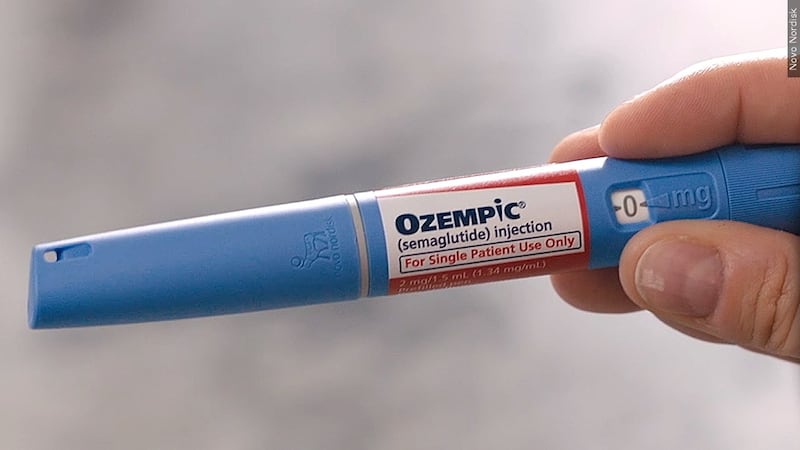
Steele said reports connecting NAION to GLP-1 drugs have mostly been linked to semaglutide, not other generic drug names. She said several studies, including review studies, have been done to examine the data.
Steele said it remains unclear whether there is truly an association. She said some studies have reported an association with an increased likelihood up to 10 or 11 times more likely for the condition to occur in patients taking the drug, while other studies report no association at all. She said there is a question of what the mechanism is, and a question of whether patients taking the drug are already at risk for the condition.
No reversing the damage
Steele said once NAION damage is done to the eye, there is no reversing it. She said it is important to see a doctor right away to prevent the condition from spreading to the other eye. She said it is a good idea to see an eye doctor before taking GLP-1 drugs.
Drugs treat life-threatening conditions
Steele said the drugs are important for a lot of patients. She said the drugs are doing a good job managing life-threatening conditions, often multiple comorbidities, including diabetes and obesity, which can lead to conditions such as kidney failure.
Get news alerts in the Apple App Store and Google Play Store or subscribe to our email newsletter here.
Copyright 2026 WBRC. All rights reserved.