Survivor recalls 81-floor escape from World Trade Center on 9/11
Alabama man who helped install the WTC’s fire alarm system escaped north tower after 2001 attack
BIRMINGHAM, Ala. (WBRC) - It was another terrorist attack that brought Lewis Sanders to the World Trade Center.
Following the 1993 car bombing that killed six people, the Port Authority of New York and New Jersey, which owned and operated the World Trade Center, upgraded its security and safety infrastructure, including adding a decentralized redundant fire alarm system.
Lewis Sanders worked for the company that was awarded the contract. By September 2001, the job was more than 80% complete, and Lewis Sanders had moved into a supervisory role.
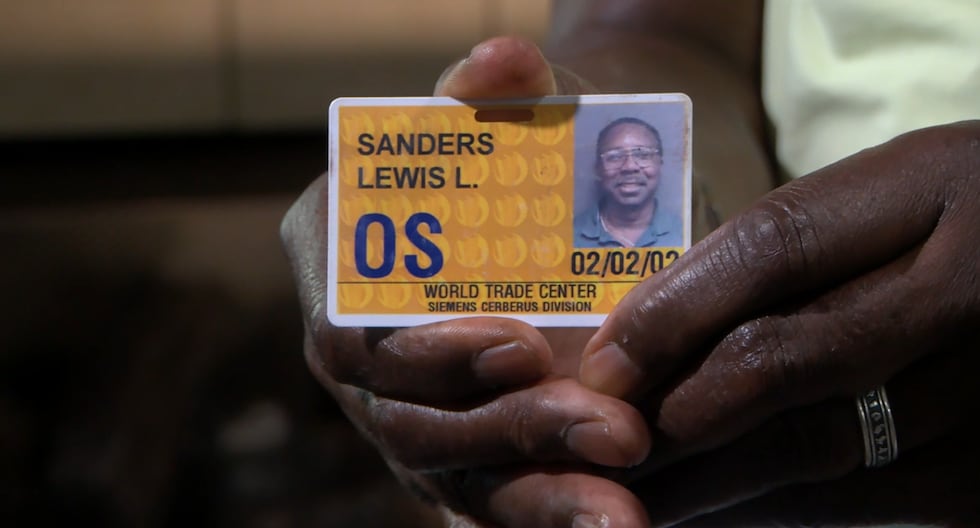
“I was in my 50s at the time, all the rest of the guys were in their 20s,” said Lewis Sanders. He added with a warm smile, “They used to call me ‘Pops’ and stuff like that and joke with me.”
Morning commute, the moment of impact
The morning of Sept. 11, 2001, began the same as countless others. Lewis Sanders and his wife, Vanessa Sanders, commuted from Staten Island. She was retired and caring for her father, who had cancer.
“I would get off at the World Trade Center. She would go up to Houston Street,” he said.
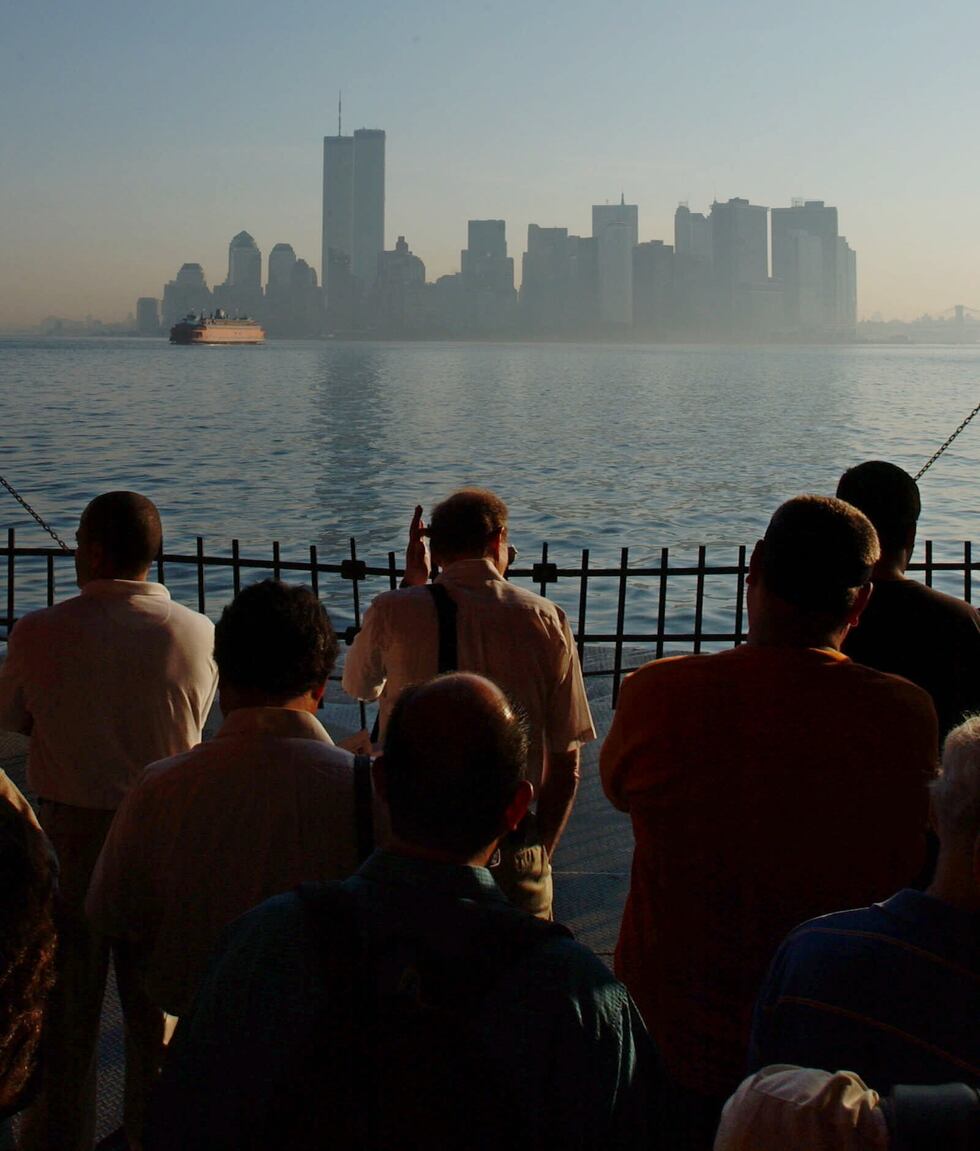
His office was on the 81st floor in World Trade Center 1, the north tower.
“I was so high in the building that I could actually look at the church steeple around the corner from my house. That’s what I could see.”
He continued, “I couldn’t see the harbor because it was so far below, but I could see across to Staten Island.”
Lewis Sanders sat down at his desk that clear morning and was getting ready to eat a breakfast sandwich a coworker brought him when his view suddenly changed.
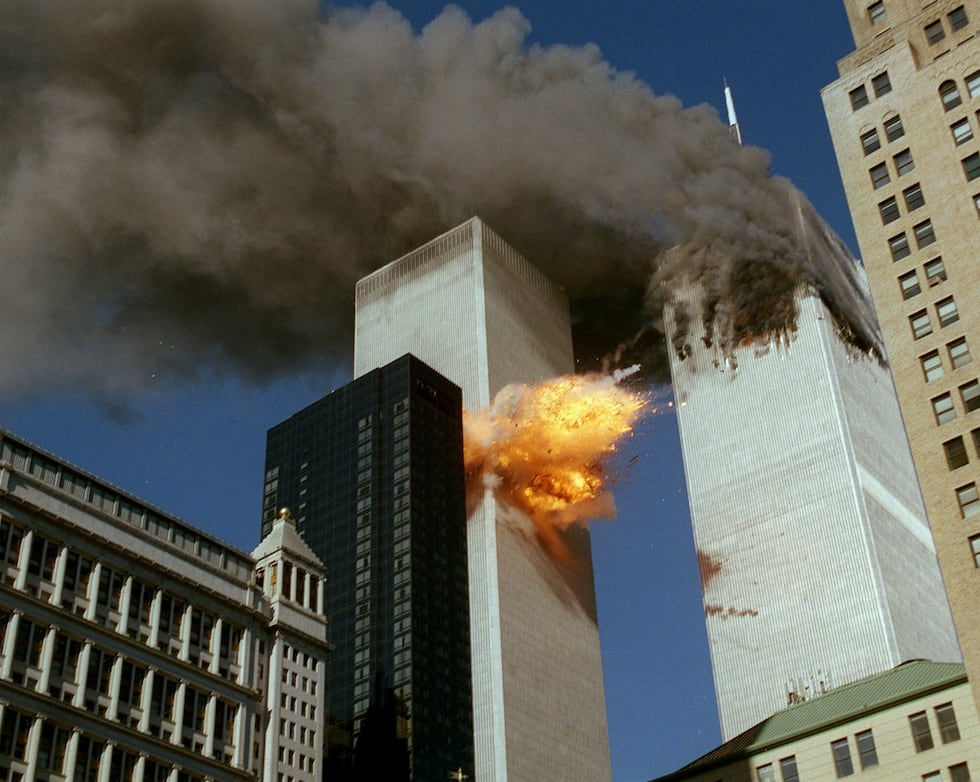
“That’s when the plane hit. Big crashing noise, like crushing, not crashing, like…” Lewis Sanders imitated the noise he remembers. “Like that, kind of like a growling noise, but crushing. And the building went like this,” he then lifted his arms and moved them slowly forward.
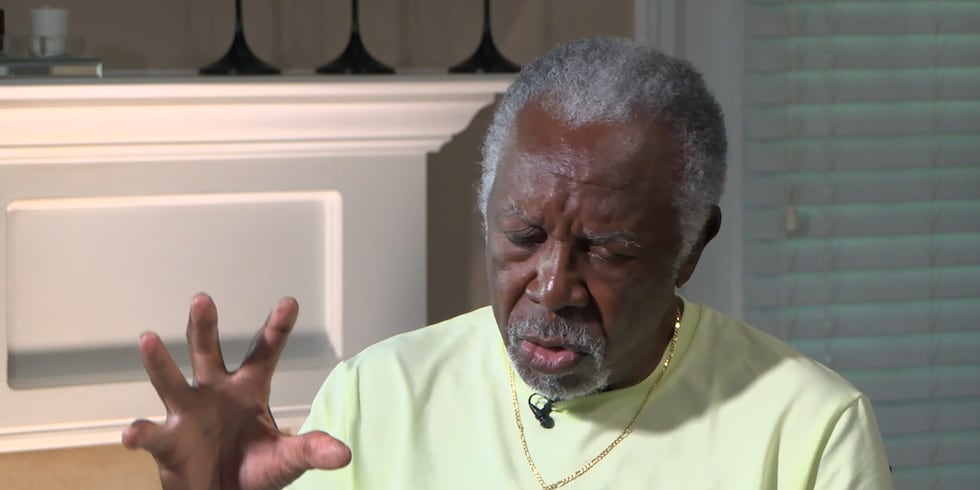
“Now I’m sitting... like this, sitting back, and when it hit… I went so far forward in my seat that… I could actually see the Statue of Liberty down in the harbor, and the Statue of Liberty is, like, in the middle of the harbor between Staten Island and the city. I went so far forward, I could see the Statue of Liberty.”
He continued, “It went so far, I thought it was going to fall. I really thought it was going to keep going. It went so far, and I think it was just from the momentum of the plane going through it, and then it rocked back.”
Debris falls as evacuation begins
That’s when everything blew through the building, Lewis Sanders remembered, and debris started raining down in front of his window.
“My first instinct, I jumped up, and I ran over to the window, and I looked down, because right down below us was, I can’t remember the name of it. It was a hotel in the complex. The roof of the hotel was right straight down below our windows, right? And I looked down, and I could see all the debris on the roof of the hotel. And I saw a few bodies,” said Lewis Sanders with a pause. “And that was... that was really bad.”
Just then, Lewis Sanders’ radio started going off. Dozens of floors below, operation and management staff in the Fire Command Center and Operations Control Center were trying to figure out what was going on.
“Y’all know what’s happening? No. Nobody knew what was going on,” Lewis Sanders said, recalling the first conversation.
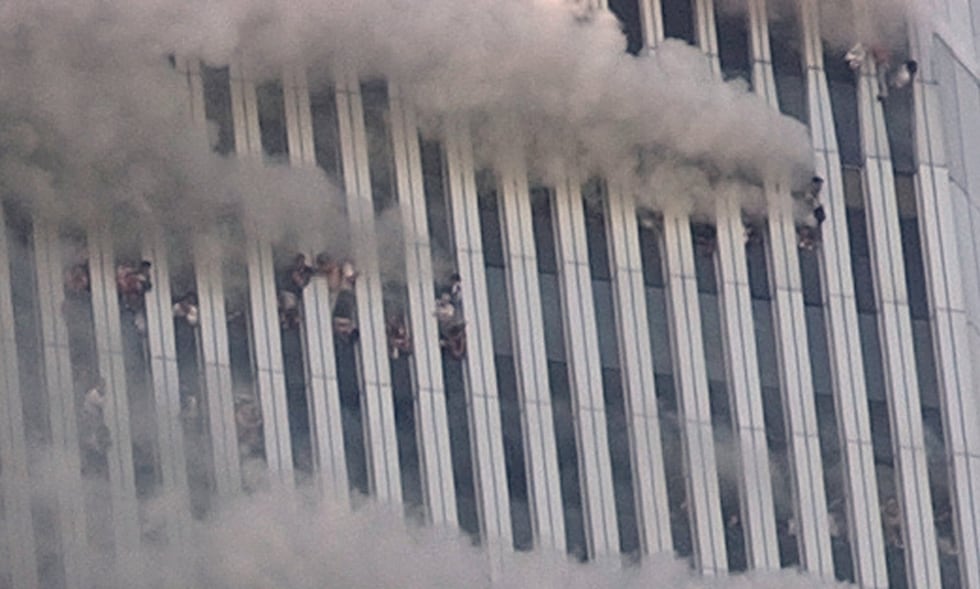
“I think they said, ‘Can you guys get out?’ And I said, ‘Yeah, I think we can.’”
They first tried a central stairwell that was located right outside their office.
“It went right straight down through the middle of the building, right? And we went to that staircase and started down. We went down maybe a floor and a half, and the smoke started coming up, and it chased us back up the steps.”
A little more than a mile away in Greenwich Village, his wife, Vanessa Sanders, got the first of many phone calls.
“We were on our way to the cancer center, and shortly after, my oldest son, he was sleeping [and called] and he says, ‘People keep calling the house, something about the World Trade Center?’ And he didn’t really know what was going on. So, we turned on the television,” she said. “And then I was like, ‘what building is he in?’ I couldn’t even remember what tower he was in. And we just stood there.”
Checking the floors on the way down
Back in the north tower, people working in an office next door to Lewis Sanders’ came over “because they knew we were the fire alarm guys.”
Lewis Sanders’ group of five grew to 15 with the nearby workers. Still minutes after the first plane hit, there was a lot of confusion over what was happening and the seriousness of the situation.
“[One guy] he says, ‘Let me check something.’ And he goes back out, and really, I didn’t know what he was doing. He goes back out, and he runs all the way around the floor. The floors are big. Trade Center floors were like, they were 150 by 150. That’s how big the floors were.”
“He ran all the way around the building to a staircase that was over here,” Lewis Sanders explained, using his hands to diagram the location. “And it was clear. He came back. He didn’t just go. When he found that staircase, he ran all the way back, came back and got us, got all of us.”
Together, the group began to make their way down 81 flights of stairs.
Security measures following the 1993 attack meant most workers only had access to their floor and office, but Lewis Sanders and his team, including coworker Johnny, had keys to every floor and office.
“We went on every floor. Johnny and I got off the staircase and went around each floor as we went down, looking for people, making sure everybody was out as we went down,” Lewis Sanders said. “We told everybody, ‘Y’all just keep going. Don’t stop.’”
Stopped by Secret Service
The pair was stopped around the 65th floor by two men.
“They were Secret Service,” Lewis Sanders recalled.
“And the guy says to Johnny, ‘Those keys?’ I said, ‘Yeah, we’ve been checking the building as we come down.’ He said, ‘Well, guys, don’t stop no more.’ He said, ‘Y’all keep going.’ He said, ‘Can I get those keys?’ And he took Johnny’s keys and… he gave Johnny his card, his business card. He said, ‘I’ll get them back to you when this is over, I’ll get them back to you.’”
Lewis Sanders continued, “Never heard from him. I’m pretty sure he died because he was going up.”
While in the stairwell, his radio went off again. Another plane hit the south tower.
“That’s when we knew it was a terrorist attack.”
Reaching the Plaza level
It took one hour and five minutes to get out of the building. Sanders said they came out at the Plaza level, which was elevated above the street.
He said a police officer was standing near the stairwell to block the view and direct everyone to the staircase leading down to the Concourse level and street.
“He was telling us, ‘Don’t look at the Plaza’,” Lewis Sanders recalled, but he didn’t listen. “There were a few bodies laying there. That’s what he didn’t want us to see.”
They followed the crowd and saw James “Jim” Barbella, who was the General Maintenance Supervisor for the World Trade Center. Lewis Sanders worked with him often. He sat down and talked with him for a minute.
“He said, ‘Look get out of here.’ I said, ‘Sure?’” Lewis Sanders recalled. He said he should stay. They were near a Fire Command Station where the fire alarm system he helped install was located.
“You want me to help?” Lewis Sanders remembers asking. “He said, ‘Are all your guys here?’ He said, ‘Lew, get out of here.’”
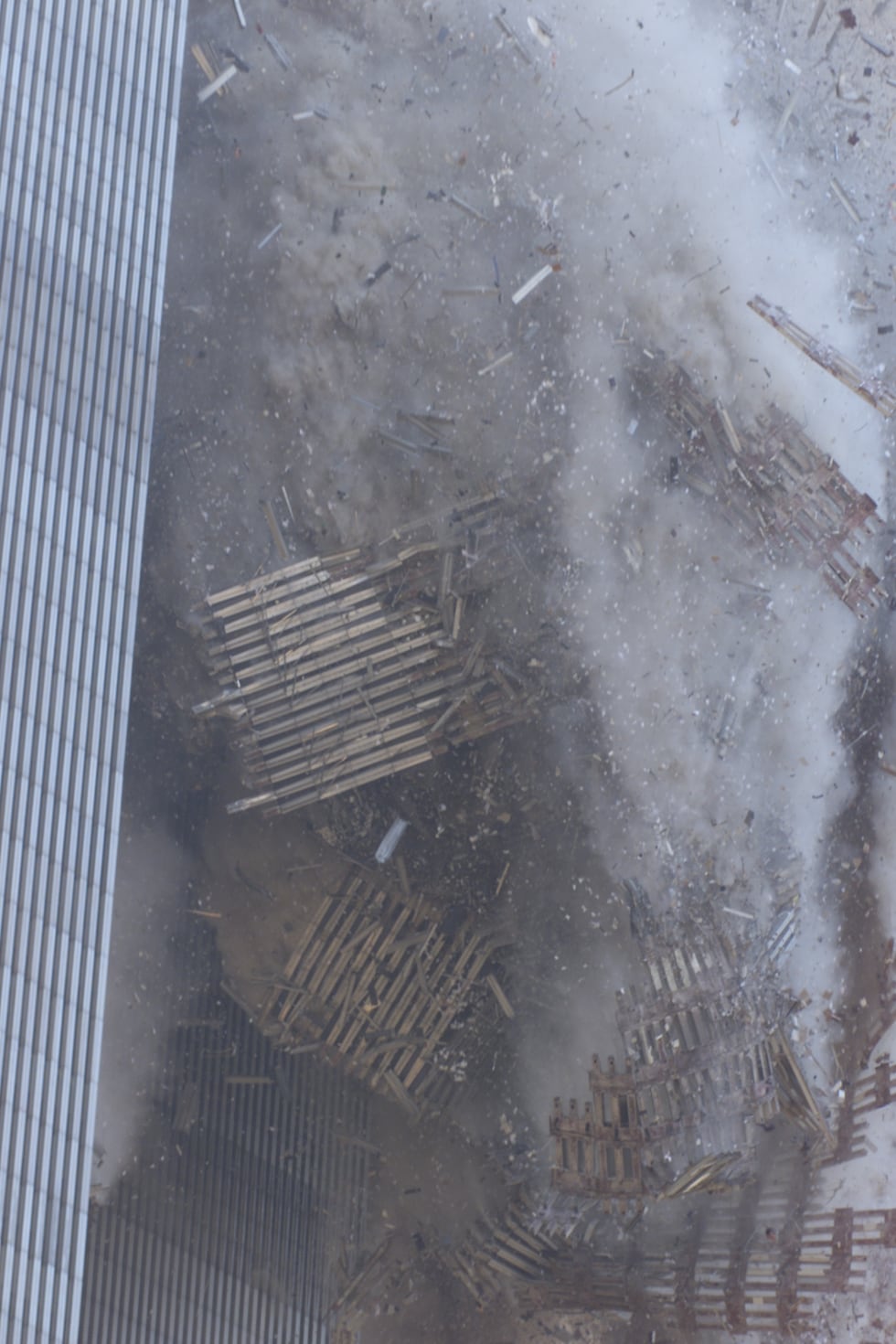
Lewis Sanders said that warning saved his life. Five minutes later, the south tower collapsed. Barbella didn’t survive.
“He was a good guy, too.”
The walk home
Lewis Sanders and Johnny started the long walk home. They made it to Brooklyn and saw the north tower fall behind them.
As Lewis Sanders was getting to safety, his wife was watching the news and taking calls from family desperate for answers.
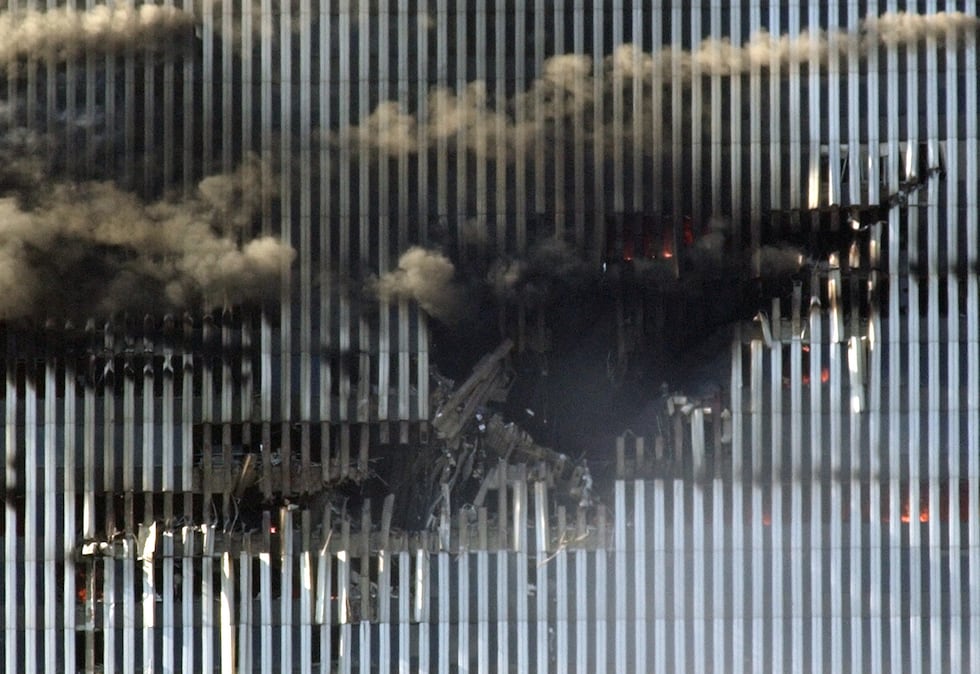
“My son is calling me from Cleveland, and he wants to come home. He’s upset. Of course, I’m upset. His family is calling me. I don’t know what to tell them other than that he’s going to make it out,” said Vanessa Sanders. “I just knew he was going to make it out. Something inside of me just told me, and I had nothing to base that on, but he made it out.”
“And I got angry at family members because they were like, just falling apart, and I basically had to keep it together. I had two kids and [I was] worried about him,” she said while pointing to her husband seated next to her. “I just prayed that everything was going to be okay.”
At some point in his journey back home, Lewis Sanders’ boss was able to get in contact with Vanessa Sanders and connected the two through Lewis Sanders’ radio, which he was still holding onto.
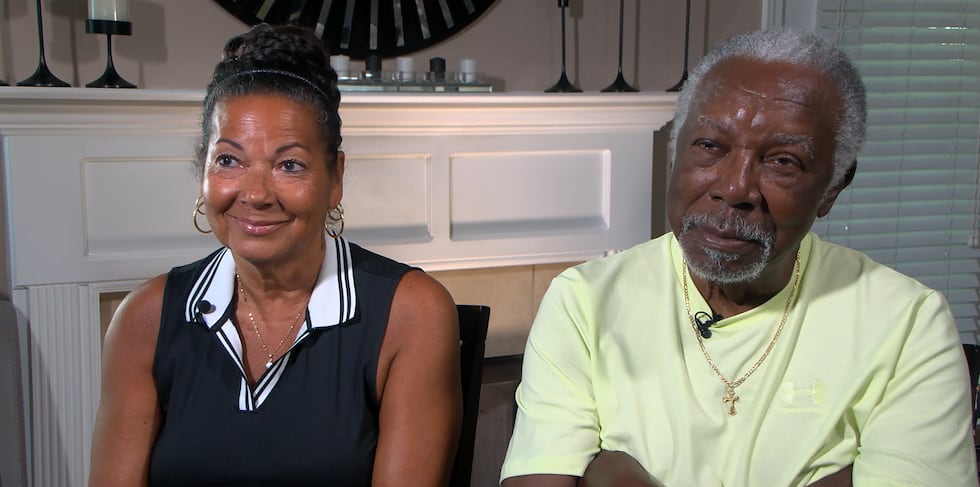
“I was so relieved,” she remembered. “I think, at that moment, was when I broke down.”
Lewis Sanders took a bus from Brooklyn to Staten Island and was at his sister-in-law’s house, the family’s gathering place, by mid-afternoon.
“She had a big, elevated porch overlooking the street, and a big staircase,” Lewis Sanders remembered. He said when he walked up the stairs, his family was “surprised” to see him. They sat on the porch steps and talked the rest of the afternoon.
Aftermath
It would be three days before Vanessa Sanders could get out of the city and back home.
“Everything shut down,” she remembered.
Among millions of New Yorkers, she started noticing the faces that were missing.
“Weeks later, you wonder, because they’re not sitting on the same boat at the same time in the same spot. Did they make it out? Did they retire? What happened with them?” said Vanessa Sanders.
Lewis Sanders did not go back to Ground Zero for months.
“When I first went back there,” he remembered, “all the debris was cleared away.”
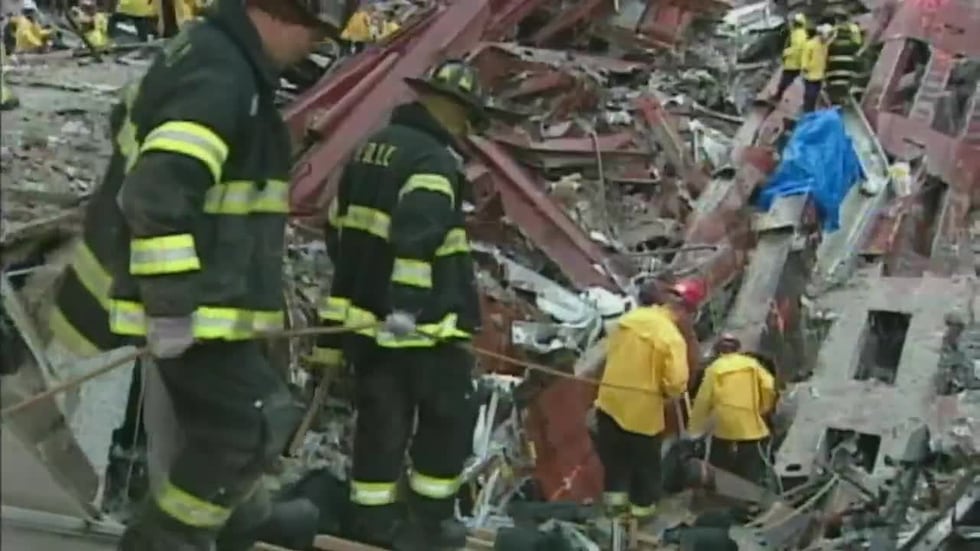
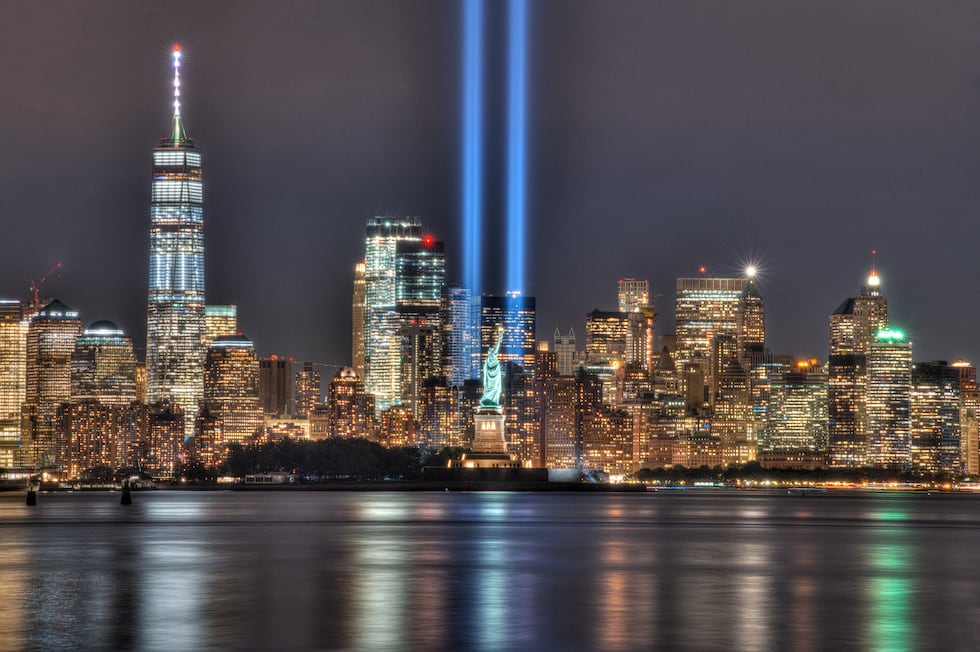
Lewis Sanders said it was difficult to process all that he witnessed: the sounds and feeling of the plane hitting the north tower, the bodies on the ground, the screams as the south tower collapsed, and the sight of that familiar skyline transforming in less than a minute.
“I thought about it for a long time. How in the world was I in a place where almost 3,000 people died and I got out of it?” He wondered.
Lewis Sanders retired in 2008 and moved to Alabama a couple of years later, but he still returns to New York often and stays in touch with Johnny.
Now, 25 years later, Lewis Sanders no longer questions why he survived. Instead, he focuses on sharing his story to keep the solemn pledge to never forget.
Watch an extended interview with Lewis Sanders, WBRC’s Morgan Hightower
Get news alerts in the Apple App Store and Google Play Store or subscribe to our email newsletter here.
Copyright 2026 WBRC. All rights reserved.