Alabama pediatrician says parents are refusing shot that prevents serious bleeding disorder
BIRMINGHAM, Ala. (WBRC) - For the first time in her nearly 20-year career as a pediatrician, Dr. Candice Dye said parents are questioning the importance of vitamin K injections for their newborns.
“I don’t ever remember having a conversation about vitamin K refusal,” said Dye, who, in addition to treating patients, serves as the medical director of the Primary Care Clinic, associate program director for the Pediatric Residency Program and professor at The University of Alabama at Birmingham.
Those conversations are happening more frequently, not just at UAB, but in hospitals across the state and country.
A review of more than 5 million births published in The Journal of the American Medical Association found the number of newborns not receiving vitamin K increased 77% between 2017 and 2024, from 2.92% to 5.18%.
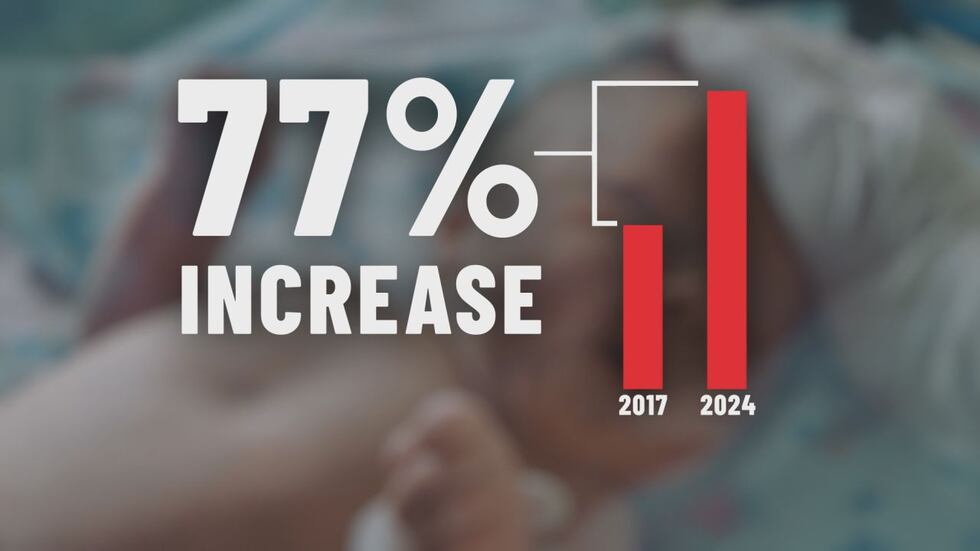
The data shows most newborns are still receiving the injection that helps prevent internal bleeding and has been recommended by the American Academy of Pediatrics for decades, but the increase in refusals is alarming to doctors like Dye.
“You know, there are so many things that we can’t prevent, that we have no control over, and this is one of those things that we know, I mean, it is proven to prevent death and to prevent just devastating disability,” said Dye.
Vitamin K is a nutrient that is critical to helping blood clot and stop bleeding. Babies are born with very little vitamin K because it doesn’t transfer well through the placenta, and their sterile intestinal tracts prevent them from producing the nutrient on their own, making them vulnerable to vitamin K deficiency bleeding (VKDB).
“The places that we see it most devastatingly are intestinal and then in the brain,” Dye said.
According to the Centers for Disease Control and Prevention (CDC), babies who don’t get the vitamin K shot are 81 times more likely to develop late VKDB, which most commonly happens between 2 and 8 weeks after birth, but can develop at any time up to 6 months of age.
The CDC said the disease is rare, “but only because most newborns get the vitamin K shot,” and adds data of those cases show one in five babies with the disorder die.
Even with those facts, Dye said some parents still walk away.
“To have those conversations and still be met with, ‘Well, we just don’t want it,’ that’s hard. That’s really hard,” Dye said.
A ProPublica investigation reviewed death investigation data from state and federal agencies and found the number of deaths linked to VKDB “has started to climb,” but said those numbers likely “capture only a fraction of the deaths” because of limited tracking and how deaths are classified.

“In 2024, for example, more than 700 newborns died from spontaneous bleeding in their brains, which could have been complicated by liver disease or prematurity. Still, six medical specialists and one official at the CDC said a meaningful portion of those deaths likely were caused by vitamin K deficiency,” ProPublica reporter Duaa Eldeib wrote.
WBRC 6 News reached out to the Alabama Department of Public Health for data specific to vitamin K, including refusals and infant deaths linked to the disorder, but was told this is not data ADPH tracks.
WBRC 6 News has filed public records requests for autopsy data to determine how many infants’ deaths in Alabama have been attributed to VKDB, but those requests have yet to be answered.
WBRC also requested information from dozens of hospitals to try to quantify vitamin K refusals in Alabama. Researchers in the JAMA article used hospital data contributed by more than 400 facilities across all 50 states. However, they did not break down the trends by state.
While that study revealed how many babies are missing the shot, it doesn’t fully explain why, because the data did not include reasons from parents or clinicians on “the reasons for nonreceipt.”
Dye said for her, the questions began during COVID, and said in her interactions, parents oftentimes aren’t “able to articulate what their concern is.”
“I think it also, you know, rolls into vaccine refusal, vaccine hesitancy and, you know, societal distrust,” Dye said.
According to the Alabama Hospital Association, acute care hospitals follow AAP guidelines that strongly recommend all newborns receive an intramuscular dose of vitamin K within the first six hours of birth. Parents have the right to refuse the the shot, and are often asked to sign a waiver.
Since the state does not track vitamin k refusals, WBRC reached out to the hospitals in Alabama designated as “birthing-friendly” hospitals by the Centers for Medicare and Medicaid (CMS) and requested the following information:
- Does your hospital ask parents who opt out of Vitamin K shots to sign an ‘Informed Refusal’ or ‘Against Medical Advice’ waiver?
- Does your hospital still perform circumcisions if the baby has not received a Vitamin K shot?
- If yes to the first question, can you share how many of these forms were signed in 2024 and in 2020?
- If no to the first question, has your hospital noticed an increase in parents rejecting the Vitamin K shot for their newborns? If so, how do you quantify that?
Hospital’s responses to questions from WBRC
- Andalusia Health - Andalusia
- No reply
- Athens Limestone Hospital — Athens
- Parents who refuse a vitamin K shot are asked to sign a “refusal of care” form and are given a packet with information about the shot and recommendations provided by the CDC and the American Academy of Pediatrics.
- Baldwin Health — Foley
- Hospital spokesman told WBRC, “We strongly advocate for postnatal Vitamin K injections to protect infants against bleeding disorders. Parents who opt out of this standard of preventive care must sign an informed refusal waiver acknowledging the associated risks. Any decision to proceed with circumcision without Vitamin K prophylaxis is determined by the physician and the parent.”
- Baptist Health Brookwood Hospital — Vestavia
- Hospital spokesman told WBRC, “We are going to pass on participating in this story.”
- Baptist Medical Center East — Montgomery
- No reply
- Baptist Medical Center South — Montgomery
- No reply
- Bibb Medical Center — Centreville
- No reply
- Coosa Valley Medical Center — Sylacauga
- No reply
- Crestwood Medical Center — Huntsville
- Parents who refuse a vitamin K shot are asked to sign a “refusal of care” form and are given a packet with information about the shot and recommendations provided by the CDC and the American Academy of Pediatrics.
- Cullman Regional Medical Center — Cullman
- Request acknowledged, response expected.
- D W McMillan Memorial Hospital — Brewton
- No reply
- DCH Regional Medical Center — Tuscaloosa
- No reply
- Decatur Morgan Hospital - Decatur Campus — Decatur
- Parents who refuse a vitamin K shot are asked to sign a “refusal of care” form and are given a packet with information about the shot and recommendations provided by the CDC and the American Academy of Pediatrics.
- Dekalb Regional Medical Center — Fort Payne
- Request acknowledged, response expected.
- Flowers Hospital — Dothan
- No reply
- Gadsden Regional Medical Center — Gadsden
- A hospital spokesperson said, “Because an infant can be at risk of life-threatening internal or cranial bleeding if they do not receive a Vitamin K injection shortly after birth, we work to help parents understand the benefits of the injection and the risk of refusing it. If they decide not to allow administration, we ask them to sign an informed refusal waiver that details the benefits and risks. The decision to proceed with circumcision if an infant has not received Vitamin K is between the parent and the physician. However, both the American Academy of Pediatrics and the American Urological Association recommend prophylactic Vitamin K before circumcision to prevent excessive blood loss.”
- Grandview Medical Center — Birmingham
- A hospital spokesperson said, “Grandview Medical Center is dedicated to providing compassionate, evidence-based care, and we actively engage with parents to address concerns regarding routine newborn health protocols. Vitamin K injections are routine preventive care recommended by the American Academy of Pediatrics (AAP) to prevent life-threatening internal or intracranial bleeding. In addition, the AAP and the American Urological Association have recommended prophylactic Vitamin K before circumcision due to the risk of severe blood loss. Parents who opt out of Vitamin K treatment sign an informed refusal waiver which details the injection’s benefits and the risks from not receiving it. Decisions around Vitamin K administration and whether a circumcision is performed are ultimately between the parents and their physician.”
- Helen Keller Hospital — Sheffield
- Parents who choose to decline the Vitamin K injection for their newborn are asked to sign a refusal of care/declination form documenting their decision, according to a hospital spokeswoman. She said before the form is signed, “a pediatric physician meets with the family to discuss the purpose and benefits of the Vitamin K injection, answer any questions, and address any concerns. Families are also provided with educational materials from the American Academy of Pediatrics to take home for additional information.”
- Highlands Medical Center — Scottsboro
- Parents who refuse a vitamin K shot are asked to sign a “refusal of care” form and are given a packet with information about the shot and recommendations provided by the CDC and the American Academy of Pediatrics.
- Huntsville Hospital for Women & Children — Huntsville
- Parents who refuse a vitamin K shot for their newborn are asked to sign a ‘Refusal of Care’ form and are given a packet with guidelines and recommendations provided by the American Academy of Pediatric and CDC.
- For 2024, hospital data shows 2% of babies born did not receive the vitamin k shot. The rate ticked up to 3% for 2025, and is tracking this year at the same rate, according to a hospital spokesperson.
- She added, “Huntsville Hospital for Women & Children follows the recommendations and guidelines provided by the American Academy of Pediatrics. The health, safety and well-being of every patient is our utmost priority.”
- Jackson Hospital & Clinic Inc — Montgomery
- No reply
- Marshall Medical Center — Boaz
- Request acknowledged, response expected.
- Medical Center Enterprise — Enterprise
- No reply
- Mobile Infirmary Medical Center — Mobile
- A hospital spokesperson told WBRC, “We will not be participating in this interview.”
- North Alabama Medical Center — Florence
- Parents who do not consent to their newborn receiving a vitamin k shot are asked to sign a waiver, according to a hospital spokesperson. The hospital will not perform a circumcision on newborn boys who do not receive vitamin k. Nurses have reported a “slight uptick” in rejections for vitamin k, but said a majority of newborns are receiving the shot, according to the spokesman.
- North Baldwin Infirmary — Bay Minette
- A hospital spokesperson told WBRC, “We will not be participating in this interview.”
- Russell Medical Center — Alexander City
- No reply
- Southeast Health Medical Center — Dothan
- No reply
- Springhill Medical Center — Mobile
- No reply
- The East Alabama Healthcare Authority — Opelika
- No reply
- Thomas Hospital — Fairhope
- A hospital spokesperson told WBRC, “We will not be participating in this interview.”
- UAB West — Bessemer, UAB St. Vincent’s — Birmingham and UAB Women and Infant’s Center — Birmingham
- UAB St. Vincent’s, UAB Women and Infant’s Center, and UAB West all ask parents who refuse a vitamin K shot for their newborns to sign a waiver. Dr. Dye said doctors will also counsel parents on the importance of the shot, and answer any questions they might have and try to address their hesitancy. These hospitals will not perform a circumcision on a newborn boy unless he has received the vitamin k shot. UAB does not have an official count of vitamin k refusals.
- USA Health Children’s & Women’s Hospital — Mobile
- Request acknowledged, response expected.
- Vaughan Regional Medical Center Parkway Campus — Selma
- No reply
- Walker Baptist Medical Center — Jasper
- Hospital spokesman told WBRC, “We are going to pass on participating in this story.”
Get news alerts in the Apple App Store and Google Play Store or subscribe to our email newsletter here.
Copyright 2026 WBRC. All rights reserved.