‘It is a Good Process’: Ala. Medical Cannabis Comm. Director defends licensing amidst new questions about fairness
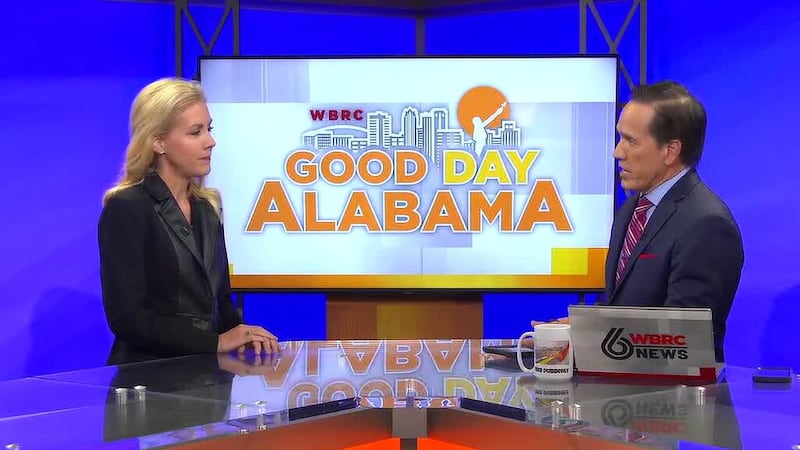
BIRMINGHAM, Ala. (WBRC) - Embattled Alabama Medical Cannabis Commission (AMCC) Director John McMillan on Friday defended the process the Commission used to grant licenses, even as the Commission faces multiple lawsuits and new questions about how it scored applications for medical cannabis licenses.
“It is a good process, except for one little mistake, it was a good process,” McMillan told WBRC.
But multiple sources connected to the process tell WBRC they’re discovering new questions or concerns about the AMCC’s process almost daily.
Among those questions: why did the AMCC send applications that didn’t meet the state’s pass/fail test on to evaluators at the University of South Alabama (USA) for scoring?
“In an effort to be fair to everybody, we decided it was the best way to approach it,” McMillan explained.
The net result of that decision was evaluators at USA compared applications of companies who did meet all of the law’s requirements with those that didn’t, and companies connected to the process say that created an unfair comparison standard.
“I think that including disqualified applications in the pool for complete scoring would have a very distinct impact on scoring and evaluation,” says Dr. Greg Gerdeman, Chief Scientific Officer at integrated license applicant Alabama Always, who was denied a license in the initial AMCC process.
“Given that scorers are grading applications relative to one another, to include companies who are not in the running is like comparing apples to photoshopped apples,” Gerdeman says.
“Reading even one application that looks really great on paper will influence how the scorer interprets other applicants. If any of those applications are not valid to compete, this absolutely degrades the fairness and even reliability of the scoring data that will come out of that reviewer. Even if a disqualified application is of poor quality, it influences how the evaluator views the field of competitors as a whole… it gives an inaccurate view. The goal should be the most competent, accurate, fair grading possible. Introducing inaccuracy into a subjective process is as straightforward as it sounds… it introduces inaccuracy.
The AMCC had a mechanism for identifying “deficiencies” in applications, and this was clearly presented as an initial phase of the evaluation process. I also feel that applicants were led to believe that only those applications that could correct identified deficiencies would be passed on for complete scoring. It is hard to even comprehend that applicants could have been deemed to have a fail, a terminal deficiency and nonetheless sent on to USA without being notified that they were out of the running.”
McMillan says the decision on whether applicants met the pass/fail test was happening on a parallel track among AMCC staff while evaluators at the University of South Alabama were evaluating all of the applications sent to them.
McMillan also told WBRC Friday that, to his knowledge, the AMCC didn’t issue a license in the 1st round in June to any applicants with a pass/fail issue.
Lobbyists and consultants connected to multiple companies who bid on the licenses say they still don’t know what kind of metric the evaluators used. The AMCC refuses to say more about how they graded those applications or what kind of “tabulation error” lead them to press pause on the entire process until accounting firm KPMG completes a review of the scoring and grading process.
“We had as clean, fair, and straight up a process as could be imagined,” McMillan told WBRC Friday. McMillan said over the last two days he’s personally reviewed the process of selecting the evaluators who scored the applications “and those evaluators were highly qualified and did a great job, I was impressed.”
As an example of how confusing the initial scoring was, sources tell WBRC in the integrated license category, an applicant that only had a P.O. Box listed for their address scored in the 90′s for facility readiness, while a group with GMP-grade facilities that appears ready to begin at a moment’s notice scored in the mid-teens.
The delay in issuing licenses is not only delaying medicine for patients, it’s costing businesses hundreds of thousands of dollars a month in some cases----some of whom will not end up with a license.
For instance, integrated license applicants we spoke to say they spent a minimum of $700,000 just to apply and are spending an average of $100-$200k per month to hold leases on spaces while they wait for a decision---there are 38 of these applicants for only five integrated licenses.
Integrated license applicants are particularly upset by what some see as an unfair workaround associated with file size limitations on documents that were submitted as a part of the application process.
The Commission’s rules told applicants they could only attach files under 10mb in size, and some applicants spent thousands of dollars compressing massive files into that limit. In the process of making the files smaller, they say the visual quality of their application materials was affected.
The commission’s counsel testified in court that they told some applicants who inquired about a workaround to the file size limit that they could put a “holding page” in their application.
Then, after the deadline passed, they could submit a potentially much bigger and uncompressed file using a USB drive.
But in a court hearing in early April, AMCC Staff Counsel Justin Aday admitted they only communicated that workaround to applicants who specifically asked about the file size limit before the filing deadline.
“And so, just to make sure I understand, you didn’t think it was unfair to allow some people to provide information that was more than ten megabytes and other people weren’t able to do that?” asked William Somerville an attorney for Redbud Remedies.
Aday: No.
Somerville: Do you think based on your scoring process that allowing some people to file applications that were greater than ten megabytes gave them an advantage over people who were able to file only ten megabytes?
Aday: I don’t know if it would or would not, or if it will or will not.
Somerville: Do you deny that it will give them an advantage?
Aday: I don’t know what advantage it may give them. I don’t know what’s in a particular application. I don’t know if anything is dependent upon what they submitted that’s more than ten megabytes.
Somerville: Wouldn’t you agree, all other things being equal, the more detailed application is going to win over the less detailed application?
Aday: I can’t speculate to that.
That contention is part of several lawsuits filed by applicants who were denied licenses, and are now questioning the entire process.
McMillan says those lawsuits, not the Commission’s process, are the holdup to getting medical cannabis in the hands of patients in Alabama who need it.
“With the integrated licenses, there were always going to be five happy people and 33 unhappy people and they will look for any reason in the world to challenge it,” McMillan said. “Everyone of them thought they had the best application, that’s just human nature. The sad part is people who need the medication are sitting out there waiting because of human greed.”
McMillan says he wishes applicants who were denied a license initially would follow the appeal and review process laid out in state law, which gives companies 30 days to request a review. But advocates for applicants point out those companies who request a review, under the law, have to pay for that process, with no guarantee of a result.
Applicants have also questioned why the Commission staff didn’t visit the sites of potential licensees before issuing a license, an idea McMillan calls impractical given the number of applicants and the size of the Commission staff, but says is covered by the law’s provisions.
“We have to visit these sites within 30 days of awarding a license, and if they don’t have what they say they have it’s highly unlikely they will get a license,” McMillan said.
The AMCC is also facing criticism over its initial decision to award one of the five integrated licenses to Verano Holdings, a national medical marijuana company that, according to it’s most recently quarterly filings with the Securities and Exchange Commission, owes $193 million in deferred income taxes, while having $95 million cash on hand.
“The only thing we looked at with legalities was background checks,” McMillan explained. “Most of those entities created an Alabama-based LLC, so what was going on elsewhere was irrelevant.”
McMillan chairs the University of South Alabama foundation, while AMCC Chair Dr. Steven Stokes is a USA board of trustees member, but Stokes recused himself from voting on any issues related to USA’s bid to evaluate and score the applications, and McMillan says there is no conflict of interest.
“We talked to other higher ed institutions in our state, and some couldn’t do it for various reasons,” McMillan explains. “These evaluators did a great job, I was impressed.”
McMillan says the AMCC expects to see the results of KPMG’s review of their scoring and tabulation in late July, and the Commission plans to issue new licenses at its August 10 meeting.
Get news alerts in the Apple App Store and Google Play Store or subscribe to our email newsletter here.
Copyright 2023 WBRC. All rights reserved.